What Is an AI Business Operating System? (And Why You Need One)
You use one app for calls. Another for your CRM. Another for email, another for texting, another for scheduling, another for reviews. Six logins, six bills, six places where leads fall through the cracks.
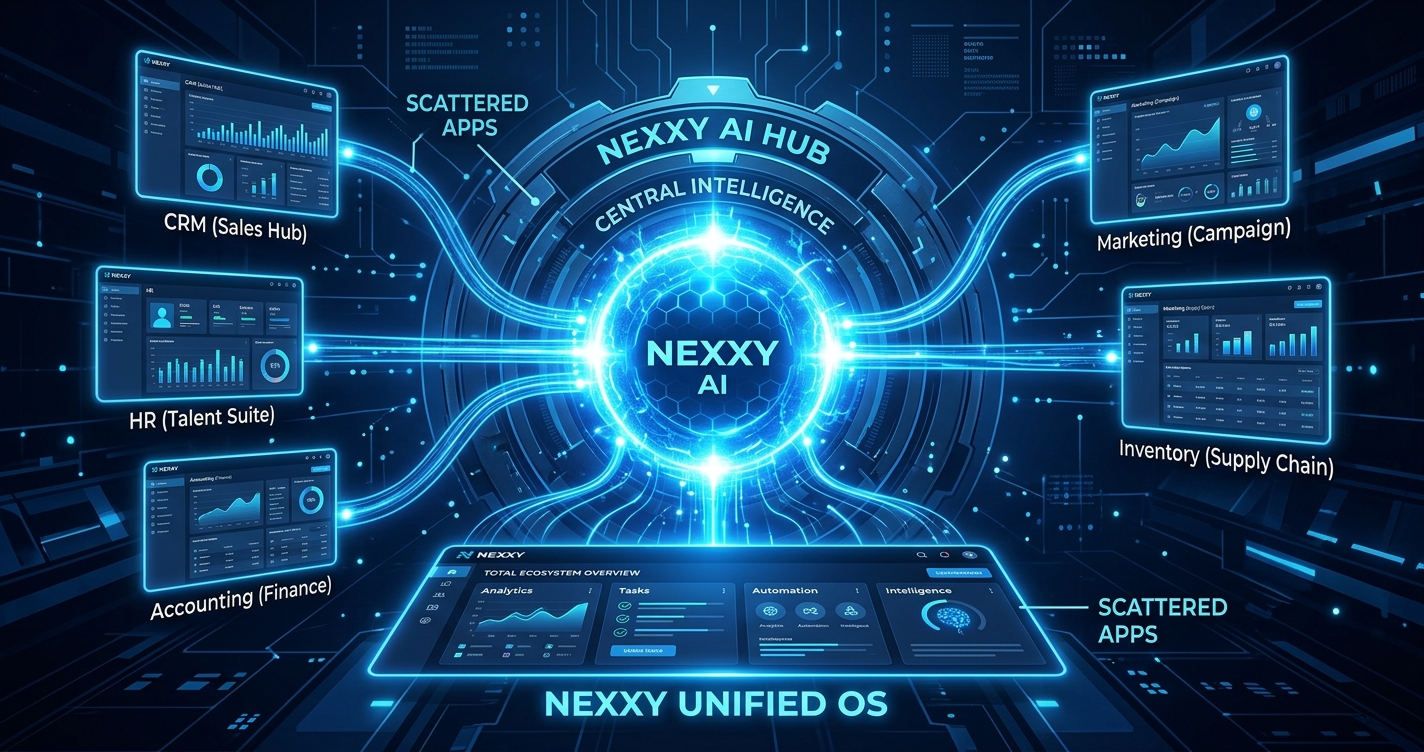
An AI business operating system replaces the stack: one platform where AI answers your phones, manages your leads, runs your follow-ups, books your calendar, and grows your reviews — all connected, all automatic.
From Tools to a System
Tools are passive — they wait for you to use them. An operating system is active — it does the work. The difference:
| Tool Stack | AI Business OS |
|---|---|
| Phone rings → voicemail | AI answers, qualifies, books |
| You remember to follow up | Sequences run automatically |
| Data in 6 apps | One customer timeline |
| You operate the software | You describe outcomes; AI operates it |
The Core Pieces
- AI receptionist — every call answered, 24/7
- CRM and pipeline — every lead captured and moving
- Communication hub — calls, texts, emails in one inbox
- Automation engine — follow-ups, reminders, reviews, rebooking
- Knowledge base — AI trained on YOUR services, pricing, and voice
Why Now
AI crossed a threshold: it can hold natural phone conversations, write in your voice, and execute multi-step work. What required an office manager, a receptionist, and a marketing assistant now runs in one platform like Nexxy — for less than a single software subscription used to cost.
Conclusion
The question for small businesses is no longer "which tools?" but "why tools at all?" One system, one login, one AI that knows your business — that's the operating system era.
The Hidden Cost of the Tool Stack
Beyond subscription fees, the stack taxes you three ways. Context switching: each app jump costs focus, and owners jump dozens of times daily. Data fragmentation: the customer who called, texted, and emailed appears as three strangers in three systems. Integration decay: the zap connecting app A to app B breaks silently, and leads vanish for two weeks before anyone notices. The stack doesn't just cost money — it costs coherence.
How an OS Differs From an Integration
Connecting five tools with integrations is plumbing: data trickles between silos, usually late, sometimes wrong. An operating system is different — there's one database, one customer timeline, one brain. When the AI answers a call, the transcript, the booking, and the follow-up sequence are all native events in the same system. Nothing to sync because nothing was ever separate.
The Conversational Interface Layer
The deepest shift isn't features — it's the interface. Tool stacks are operated through screens you must learn. An AI OS is operated through language you already know: "How did we do this week?" "Fill Thursday's gaps." "Why did we lose the Johnson job?" The system answers from live data or executes the task. Software finally works the way owners actually think.
Who Thrives on an AI OS (And Who Doesn't)
Thrives: owner-operators and small teams drowning in communication and admin — trades, clinics, agencies, firms, local services. Not yet: enterprises needing deep custom workflows, complex permissions, or industry-specific compliance stacks. The OS is a small-business exoskeleton, not an enterprise suit.
The Transition Path
You don't rip out everything on day one. The sane path: start with AI answering and the CRM (week 1), migrate calendar and follow-ups (week 2), add campaigns and reviews (weeks 3–4), then cancel subscriptions one by one as each proves redundant. Most businesses complete the consolidation in 30–45 days and wonder why they waited.
What the Next Five Years Look Like
Just as no modern business builds its own email server, soon no small business will manually answer routine calls, manually follow up, or manually request reviews. The baseline of "how a business runs" is moving. An AI OS isn't an edge for long — it's the new normal, arriving early for those who adopt now.
Start Your Free Trial | Watch Demo
Related: ChatGPT vs Business AI OS | ROI of AI