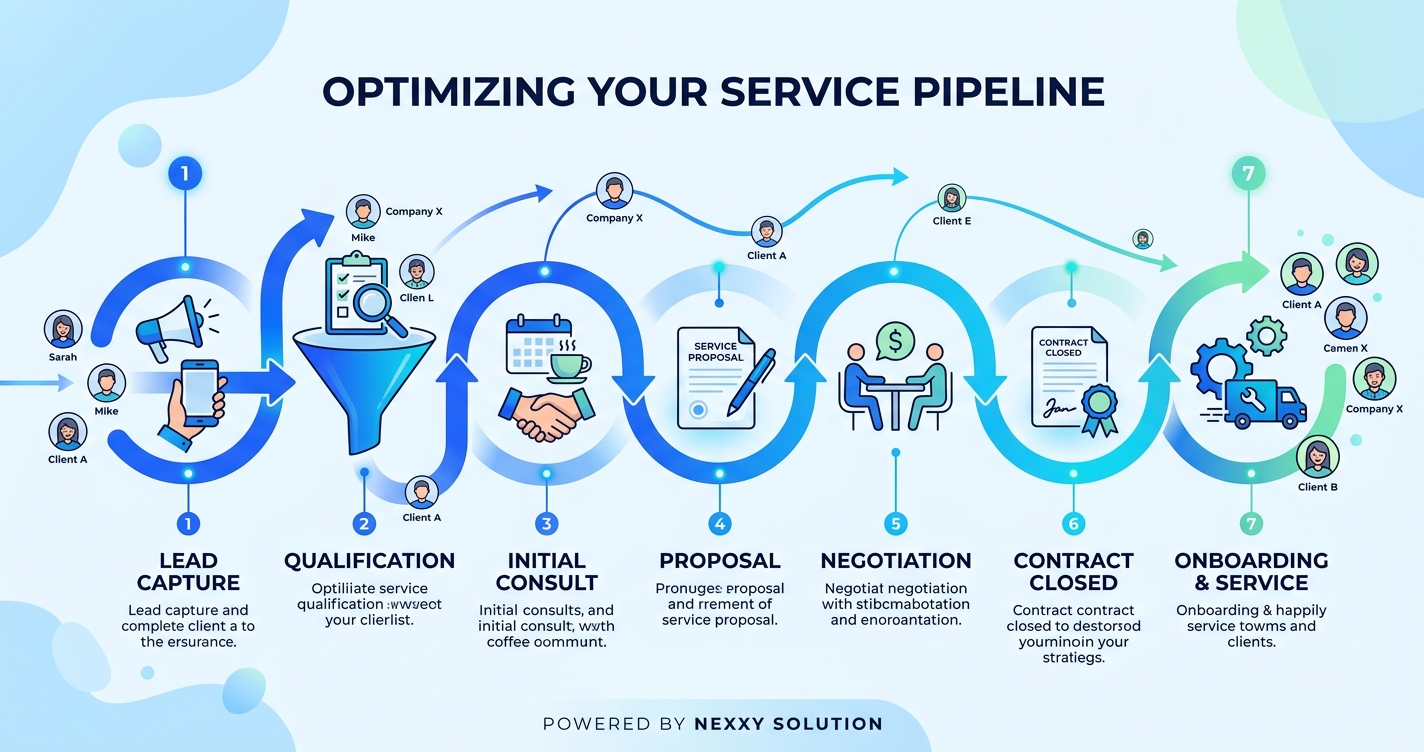
The 7 Sales Pipeline Stages Every Service Business Needs
A pipeline isn't paperwork — it's the story of every dollar your business earns, told in stages. Get the stages right and nothing falls through. Here are the seven that work for service businesses.
Stage 1: New Lead
A call, text, form, or DM arrives. Goal: capture it instantly — 100% of leads, zero exceptions. AI answering and text-back automation make this stage leak-proof.
Stage 2: Contacted
Conversation started. Goal: respond in under 5 minutes and keep it warm.
Stage 3: Qualified
Need, timeline, budget, location confirmed. Goal: score it hot/warm/cold so effort goes where the money is.
Stage 4: Quoted
Price in their hands. Goal: automated follow-up at day 1, 3, 7 — this is where most deals are won or lost to silence.
Stage 5: Booked
On the calendar. Goal: confirmations and reminders so they actually show up.
Stage 6: Won
Work done, invoice paid. Goal: review request, referral ask, and enrollment in the retention cycle.
Stage 7: Raving Fan
Repeat customer who refers. Goal: rebooking reminders, loyalty touches, birthday offers — the cheapest revenue you'll ever earn.
Make Every Stage Move
The golden rule: no lead sits in a stage without a next action. In Nexxy, each stage has automatic triggers — nothing waits on your memory.
Conclusion
Seven stages, each with one job and one automation. Build it once and your pipeline becomes a conveyor belt instead of a graveyard.
Why Service Pipelines Differ From Product Pipelines
Product sales are linear: demo, negotiate, close. Service businesses have a different shape — emergencies skip stages, quotes expire, jobs schedule weeks out, and "won" is really "won and delivered and reviewed and rebooked." Copying a SaaS pipeline template into a plumbing company is why most CRM setups get abandoned. Design for your actual flow.
The Stage-Entry Automations
Each stage transition should fire work, not just record it. Lead enters New → instant response. Enters Quoted → follow-up sequence armed. Enters Booked → confirmation and reminder chain. Enters Won → onboarding, review request scheduled, retention clock starts. The pipeline becomes the trigger board for the entire customer journey — one system, no gaps.
Handling the Emergency Lane
Service businesses need an express lane: emergencies jump New → Booked in one step, bypassing quote stages entirely. Your system should route on urgency automatically — a burst pipe never waits behind a bathroom remodel estimate. Design the fast lane explicitly, or urgent work will keep breaking your process.
The Aging Report That Runs Your Week
One view changes management: every open deal, grouped by stage, sorted by days-in-stage. Quoted deals aging past your median close time get personal attention today. New leads older than an hour get flagged red. Booked jobs approaching without confirmation get chased. The aging view turns "how's the pipeline?" from a vibe into a to-do list.
Lost Reasons: The Learning Goldmine
Require a lost reason on every dead deal — price, timing, chose competitor, ghosted, scope mismatch. Ninety days of honest lost reasons tell you more than any consultant: if "ghosted" dominates, fix follow-up speed; if "price" dominates, fix value presentation or targeting. The pipeline's losses are its tuition.
From Stages to Forecast
With clean stages and honest aging, forecasting becomes simple arithmetic: late-stage deals × historical close rate = this month's expected revenue. That single number, checked weekly, tells you when to push marketing, when to push follow-up, and when to hire. Seven stages, one ritual, total clarity.
Related: Build a Sales Pipeline | Qualify Leads Automatically