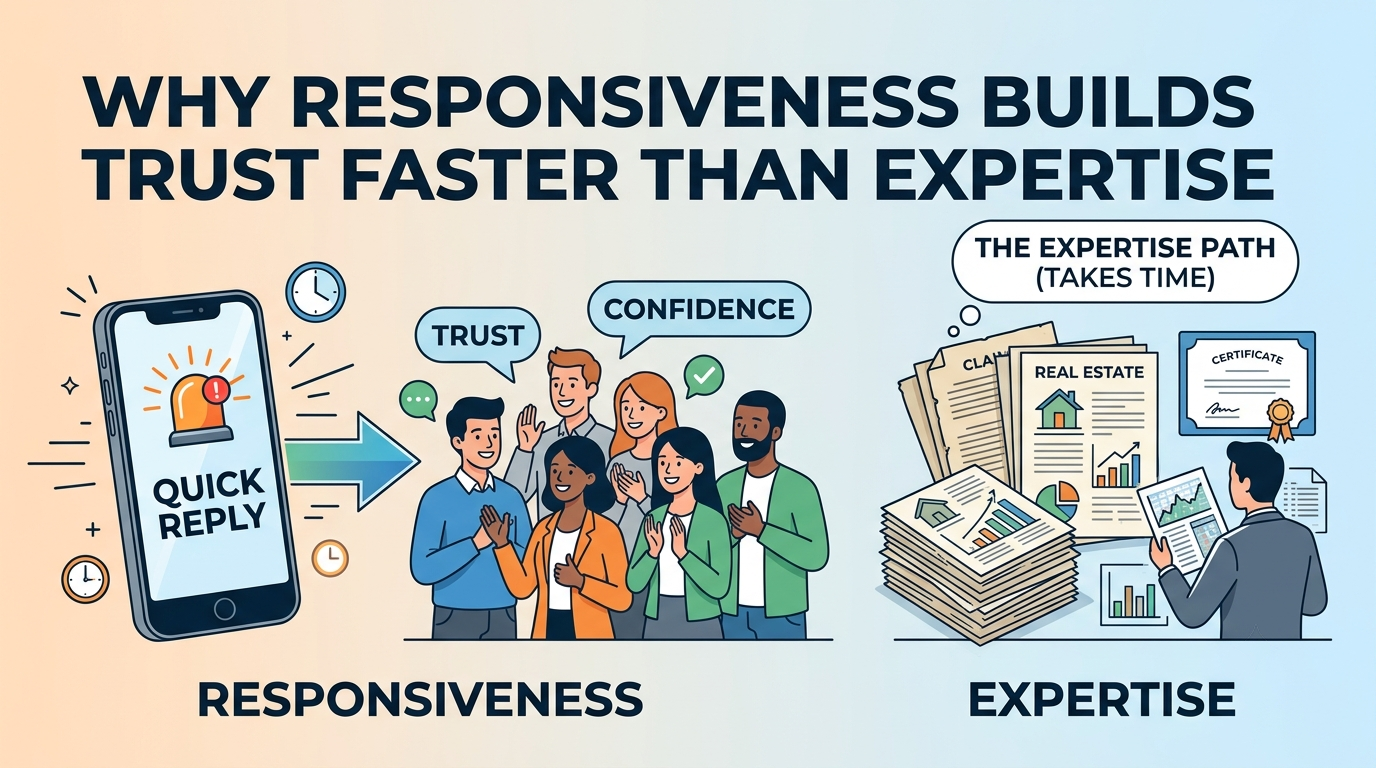
Why Speed Is Easier to Judge Than Skill
Clients generally can't evaluate an agent's market expertise on first contact. They don't yet know whether a pricing recommendation is sound, whether a negotiation strategy is strong, or whether local knowledge is deep or superficial. What they can evaluate immediately is something much simpler: how quickly, and how reliably, the agent responds.
This is why responsiveness builds trust real estate relationships faster than almost any other factor. It's observable from the very first interaction, long before there's enough information to judge expertise directly.
The Data Behind Response Time and Trust
The evidence on response time is remarkably consistent. Research from the National Association of Realtors shows that a large majority of buyers end up working with the first agent who responds to their inquiry, and that agents who respond within five minutes convert leads at dramatically higher rates than those who wait even thirty minutes.
This pattern isn't limited to the first contact. Throughout an active transaction, clients consistently rate responsiveness among the most important qualities in their overall experience, often ranking it above negotiation skill or market knowledge when asked what mattered most. The fact that responsiveness builds trust real estate clients need before they'll fully engage with an agent's deeper expertise makes it one of the most critical skills to develop.
What Responsiveness Actually Signals
Fast, consistent communication does more than answer a question quickly. It communicates something deeper about how a client can expect to be treated throughout the relationship.
It signals that the client's concerns are a priority. A quick response suggests the agent is attentive and engaged, not juggling the client as one of many low-priority tasks.
It signals reliability under pressure. Real estate transactions involve time-sensitive decisions, and a client who sees an agent respond quickly during routine moments gains confidence that the agent will be similarly reliable during a high-pressure deadline.
It reduces the anxiety inherent in a high-stakes decision. Uncertainty is uncomfortable, and prompt communication shortens the time a client spends wondering about the status of their transaction.
It sets an implicit standard for the relationship. Early responsiveness establishes an expectation that carries through the rest of the transaction, making later communication feel consistent rather than sporadic. A real estate CRM can automate initial responses so no lead waits for a reply, ensuring that responsiveness builds trust real estate relationships from the very first touchpoint.
Expertise Still Matters, Just Later
None of this suggests expertise is unimportant. It means expertise tends to matter more once a baseline of trust, often established through responsiveness, has already been earned. A client who feels confident that an agent is attentive and reliable is far more receptive to that agent's market analysis, pricing strategy, and negotiation advice than a client who is still uncertain whether the agent is engaged at all.
In practice, this means responsiveness builds trust real estate clients need as a gateway. Without it, even excellent expertise may never get a fair hearing, because the client hasn't yet developed enough trust to fully engage with the agent's advice.
Building Responsiveness Into a Sustainable Habit
Responsiveness is easy to prioritize in theory and difficult to sustain in practice, particularly across a growing client base. A few practical approaches help make it sustainable.
Set clear response-time expectations early. If immediate responses aren't always possible, communicating a realistic window, such as within a few hours, and consistently meeting it, builds trust as effectively as instant replies.
Use tools to prevent leads and messages from slipping through the cracks. Nexxy provides a centralized system that flags unanswered messages, reducing the risk of a client feeling ignored simply due to a busy day.
Batch communication without sacrificing speed on time-sensitive items. Not every message requires an instant reply, but urgent, time-sensitive communication, such as during active negotiation, should be prioritized above routine tasks.
Communicate proactively, not just reactively. Responsiveness isn't only about answering incoming messages quickly. Proactively updating clients before they have to ask is an even stronger trust signal. Nexxy's real estate operating system automates proactive follow-ups so clients never feel left in the dark.
Frequently Asked Questions
How quickly should I respond to a new client inquiry? As quickly as possible, ideally within minutes for new leads. Response speed is one of the strongest predictors of whether a lead converts and often shapes a client's first impression of reliability.
Does responsiveness matter more than market expertise? Responsiveness builds trust real estate clients need quickly because it's immediately observable, but expertise remains essential for making sound decisions. Responsiveness tends to open the door to a client fully engaging with an agent's expertise.
What if I can't always respond instantly? Set clear, realistic expectations about response times early in the relationship, and meet them consistently. Predictability matters as much as raw speed.
Can slow response times undo strong expertise? Yes, in many cases. A client who feels ignored or deprioritized may disengage or lose confidence before ever fully evaluating an agent's actual expertise.
Conclusion
Expertise takes time to demonstrate. Responsiveness doesn't. In a business built on trust, the agents who consistently show up quickly and reliably often earn client confidence well before their deeper market knowledge ever comes into play, and that early trust is often what determines whether expertise gets the chance to matter at all.
If you're looking for a better way to build stronger client relationships, stay organized, and communicate consistently, Nexxy was built with professionals like you in mind.