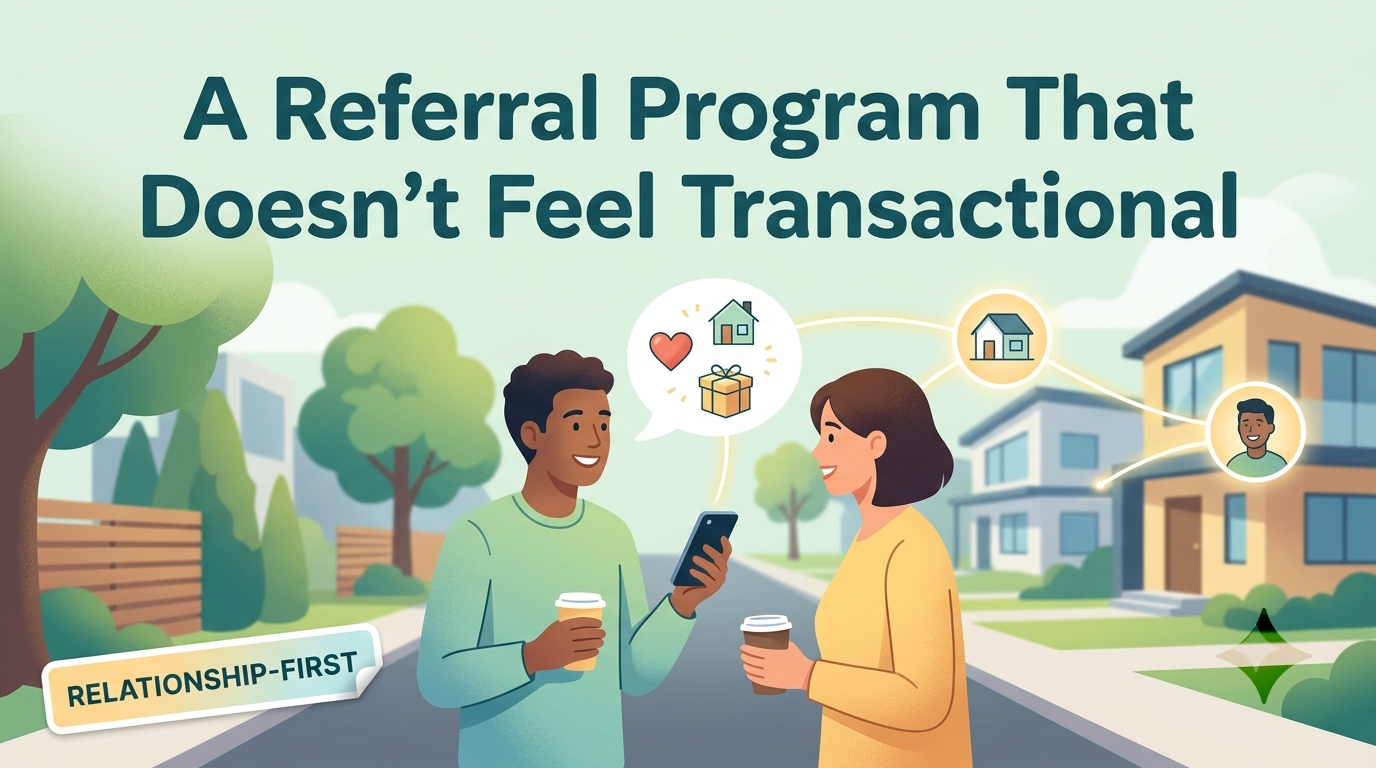
The Risk of Formalizing Referrals
Many agents build formal referral programs to encourage and reward past clients for sending business their way. Done well, this can strengthen relationships and increase referral volume. Done poorly, it can undermine the very trust that made referrals possible in the first place, by shifting the relationship's tone from genuine appreciation to a transactional exchange.
The risk is subtle but real. A referral that happens because a client genuinely believes in an agent feels very different, to both the client and the person they're referring, than one that happens primarily because of a cash incentive. A well-designed real estate referral program preserves the former while still providing meaningful recognition.
What Makes a Referral Program Feel Transactional
Leading with the financial incentive rather than the relationship. A program framed primarily around "refer someone and get paid" centers the transaction over the trust that referrals are meant to reflect.
Rewards disproportionate to the relationship. Overly large financial incentives can shift a client's motivation from genuine advocacy to opportunistic behavior, which can also affect how the referred prospect perceives the introduction.
A rigid, formal process that feels like a business transaction. Requiring clients to fill out forms or follow a formal referral process can feel more like a corporate program than an extension of a personal relationship.
Public or repeated emphasis on the incentive. Frequently reminding clients about the reward, rather than the relationship, can make the entire dynamic feel more like solicitation than genuine appreciation.
Designing a Program That Preserves Genuine Relationships
Lead with appreciation, not incentive. Frame the program primarily as a way to thank clients for their trust and support, with any reward positioned as a secondary gesture rather than the primary motivation.
Keep the process simple and personal. A referral shouldn't require a formal application. A simple introduction, by text, email, or phone call, should be all that's needed.
Make the reward feel like a genuine thank-you, not a transaction fee. A thoughtful gift, a donation to a cause the client cares about, or a personal gesture often preserves the relationship's tone better than a straightforward cash payment.
Reserve the most visible appreciation for the relationship itself, not the reward. A genuine, personal thank-you message should always accompany any formal reward, ensuring the human connection remains central. A real estate CRM can automate thank-you messages while keeping them personal, helping your real estate referral program feel authentic at scale.
Structuring Rewards Without Undermining Trust
Reward structure matters as much as the reward itself. A few approaches tend to preserve the genuine, relationship-driven tone of a referral:
Modest, thoughtful rewards rather than large cash incentives tend to keep the program feeling like appreciation rather than payment.
Rewards tied to a completed transaction, rather than simply providing a name, reinforce that the relationship, not the lead itself, is what's being valued.
Charitable donation options, allowing clients to direct a reward toward a cause they care about, often feel more aligned with genuine appreciation than a direct cash payment.
Surprise and delight elements, such as an unexpected additional gesture beyond what was formally promised, reinforce that the relationship, not a fixed transaction, is the true basis of the program. Nexxy helps you track referral rewards and automate appreciation so no gesture is ever missed.
Communicating the Program the Right Way
How a referral program is introduced and discussed matters as much as its structure. Rather than positioning it as a standalone marketing initiative, it should be framed as a natural extension of the agent's broader approach to client relationships: appreciation for trust, expressed consistently, with a formal program simply reinforcing what would ideally already be happening informally.
This framing helps ensure that even clients who never receive a formal reward, because they referred without knowing about the program, still feel genuinely valued, since the underlying relationship-first approach remains consistent regardless of whether a formal incentive is involved.
Frequently Asked Questions
Do referral programs actually increase referral volume? They can, particularly by providing a structured, low-friction way for clients to make an introduction, though the underlying relationship quality remains the primary driver of referral behavior.
Should referral rewards be cash or something else? Both can work, but many agents find that modest, thoughtful gestures, or charitable donation options, preserve the relationship's genuine tone more effectively than large cash incentives.
How do I avoid making clients feel like I only value them for referrals? Ensure the program is framed as an extension of genuine appreciation, and continue treating all past clients with the same consistent care, whether or not they've participated in the formal program.
Is it better to have a formal program or just ask for referrals directly? Many agents benefit from combining both. Direct, well-timed asks tend to generate more immediate referrals, while a formal real estate referral program provides an additional, structured layer of appreciation and incentive over time. Nexxy's real estate operating system supports both approaches seamlessly.
Conclusion
A referral program can meaningfully support a relationship-first business, but only if it's designed to reinforce genuine appreciation rather than replace it with a transactional exchange. Agents who keep gratitude, not incentive, at the center of their program build referral relationships that remain authentic, even when a formal reward is involved.
If you're looking for a better way to build stronger client relationships, stay organized, and communicate consistently, Nexxy was built with professionals like you in mind.