The Conversion Gap Between Lead Sources
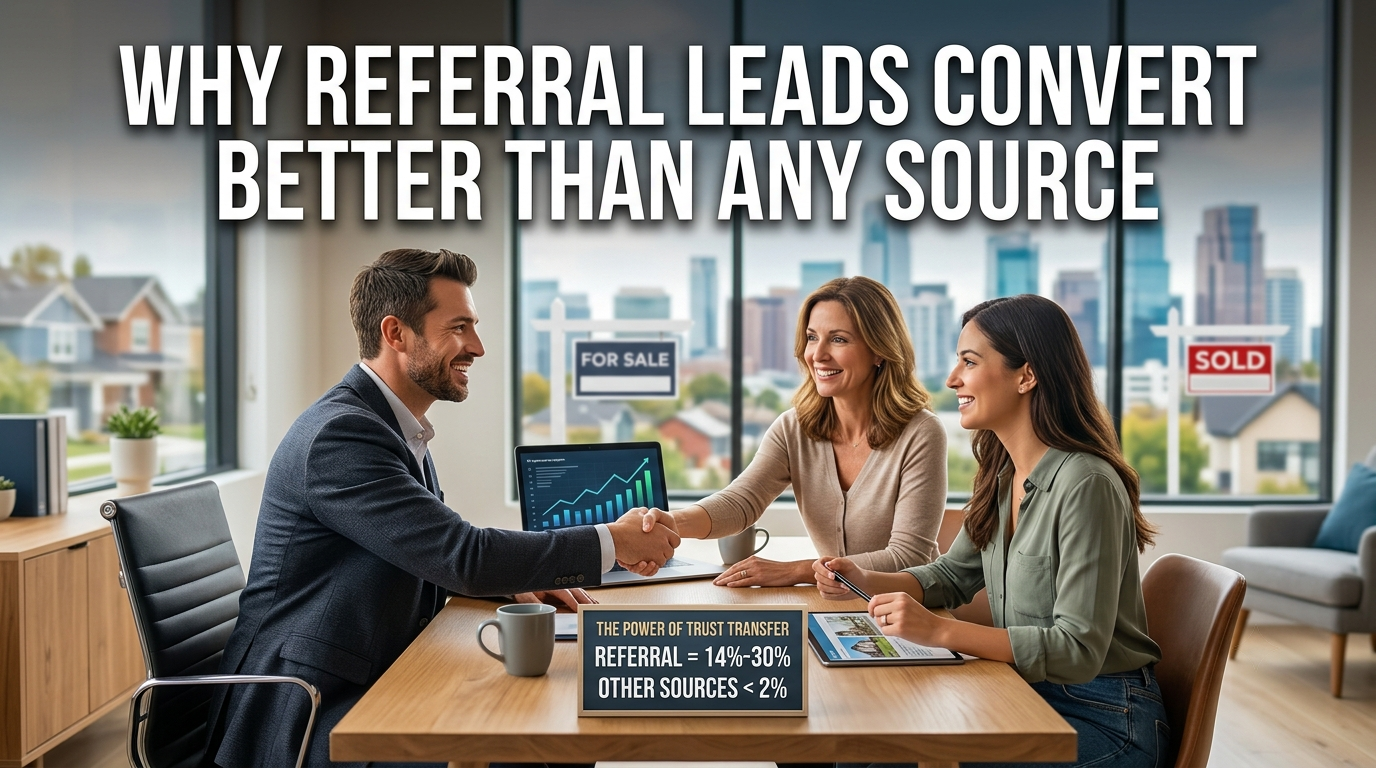
Across the real estate industry, referral leads consistently convert at rates many multiples higher than purchased internet leads or cold prospecting efforts. Industry benchmarking commonly shows referral conversion rates in the range of 14 to 30 percent, compared to conversion rates well under 2 percent for typical portal-sourced leads. This isn't a marginal difference. It represents an entirely different level of business efficiency.
Understanding why this gap exists, rather than simply accepting it as a known fact, helps explain why referral generation deserves significant strategic priority relative to other lead sources. The fact that referral leads convert better real estate industry data consistently confirms makes this a critical insight for every agent.
Why Trust Transfer Changes Everything
The core mechanism behind referral lead performance is trust transfer. When someone refers an agent to a friend, family member, or colleague, they're effectively lending their own credibility to that recommendation. The person receiving the referral doesn't need to independently evaluate the agent from scratch. They can rely, at least partially, on the judgment of someone they already trust.
This transfer of trust shortcuts one of the most time-consuming and uncertain parts of any new client relationship: establishing enough confidence for the client to feel comfortable acting on the agent's advice. A referral lead often arrives already partially through that process, simply by virtue of the introduction itself. This is the fundamental reason referral leads convert better real estate professionals receive than any other source.
What Referral Leads Skip That Other Leads Require
Extended credibility-building. A cold lead typically requires multiple touchpoints, demonstrated expertise, and consistent follow-through before trust reaches the level needed for a major decision. A referral lead often starts with a meaningful head start on this process.
Skepticism about motive. New leads, particularly from paid sources, often approach an agent with some default skepticism about whether the agent's advice serves their interest or the agent's commission. A referral, by contrast, comes with an implicit endorsement that the agent can be trusted to act well.
Uncertainty about competence. A referral typically includes some context about the referring person's positive experience, which addresses questions about the agent's skill and reliability before the first conversation even happens.
A longer sales cycle. Because trust doesn't need to be built from zero, referral leads often move through the decision-making process more quickly than cold leads, who typically require more time and touchpoints to reach the same level of confidence.
Why This Matters for How Agents Allocate Effort
If referral leads convert at a fraction of the effort required for other lead sources, it follows that activities generating referrals, relationship maintenance, past-client follow-up, and referral partner nurturing, deserve significant strategic priority, even though they don't always feel as urgent as active customer acquisition.
Many agents default to prioritizing new-customer acquisition because it feels more directly actionable and immediate. But given the conversion gap, time spent maintaining relationships that generate referrals often produces a substantially higher return per hour invested than time spent generating and nurturing colder leads. NAR research consistently supports this, showing that agents who prioritize relationships over cold lead acquisition build more sustainable businesses.
Maximizing the Referral Lead Advantage
Respond to referral leads with the same urgency as any other lead. Even though referral leads convert at higher rates, the speed of the initial response still matters significantly in confirming the trust already extended through the introduction.
Acknowledge the referral source directly with the new lead. Mentioning the referring person by name, when appropriate, reinforces the trust transfer and helps the new lead feel more comfortable moving forward quickly.
Deliver an experience that honors the referral. Since the referring person's credibility is tied to the outcome, ensuring an excellent experience for the referred client also protects and strengthens the original relationship.
Close the loop with the referral source. Letting the person who made the introduction know, with appropriate discretion, that the connection led to a positive outcome reinforces their willingness to refer again in the future. A real estate CRM can automate this loop-closing so no referral source is ever left wondering what happened. Nexxy tracks every referral from introduction to close, ensuring you maximize the advantage that referral leads convert better real estate data proves.
Frequently Asked Questions
How much higher do referral leads convert compared to internet leads? Industry data commonly shows referral leads converting in the range of 14 to 30 percent, compared to well under 2 percent for typical purchased internet leads, though specific figures vary by market and source quality.
Does a referral lead still require a fast response? Yes. While referral leads carry more inherent trust, response speed still matters in reinforcing and building on that trust, particularly in the early stages of the relationship.
Should agents stop investing in other lead sources given how well referrals convert? Not necessarily, particularly for newer agents who haven't yet built a substantial referral base. However, the strong performance of referral leads makes a compelling case for prioritizing relationship-building activities alongside other customer-acquisition efforts.
How can I increase the number of referral leads I receive? Consistent post-closing follow-up, well-timed referral requests, and maintaining strong sphere of influence and professional partner relationships are the primary drivers of increased referral volume over time. Nexxy's real estate operating system automates the follow-up sequences that generate the steady flow of referral leads convert better real estate agents need.
Conclusion
Referral leads outperform every other source because they arrive already carrying trust that other leads must build from scratch. Recognizing this advantage should shift how agents allocate their time, prioritizing the relationship-building activities that generate referrals as a core, ongoing part of the business, not a secondary effort layered on top of customer acquisition.
If you're looking for a better way to build stronger client relationships, stay organized, and communicate consistently, Nexxy was built with professionals like you in mind.