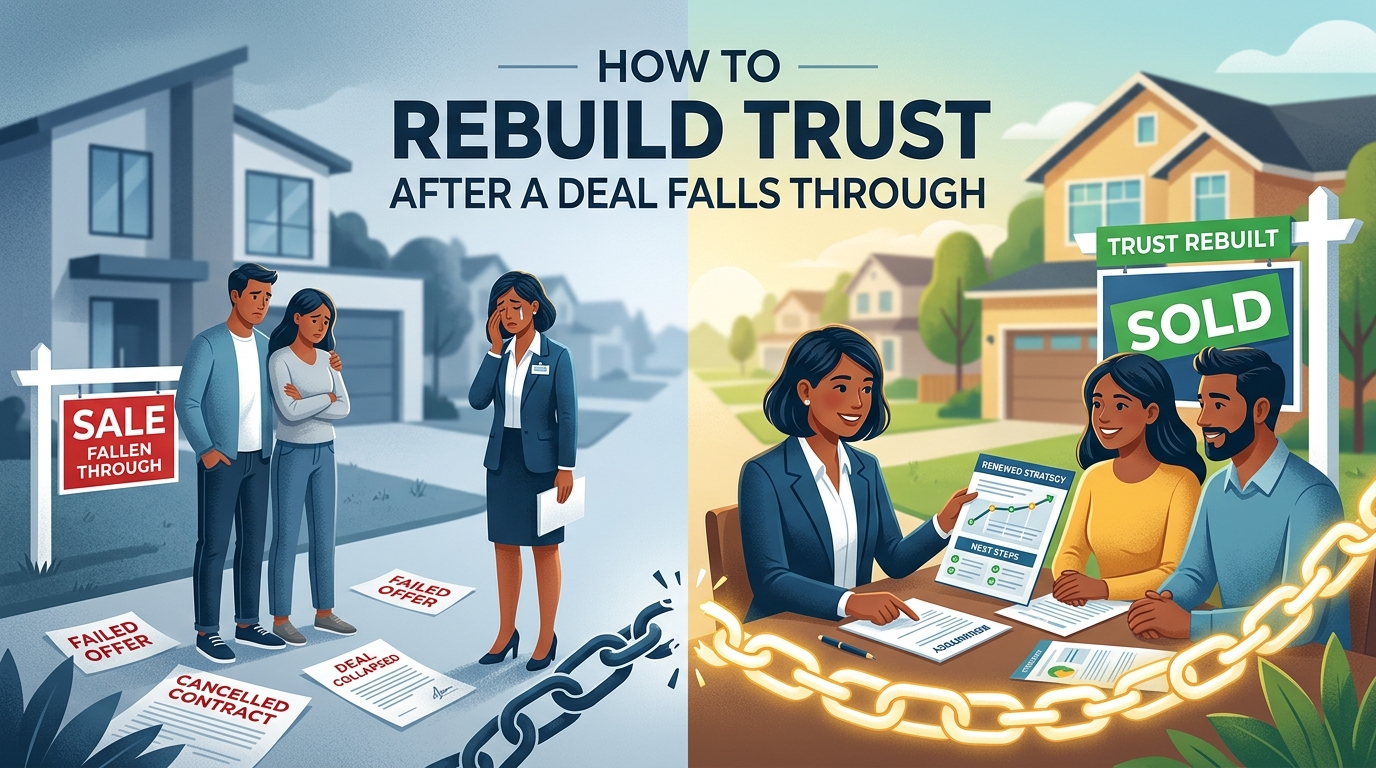
Why a Failed Deal Is a Trust Test, Not Just a Setback
A transaction falling through, whether due to financing issues, inspection findings, appraisal gaps, or a buyer or seller changing their mind, is disappointing under any circumstances. But it's also one of the clearest tests of an agent-client relationship. How an agent handles this moment often matters more to long-term trust than how smoothly the transaction was going beforehand.
Clients remember disappointment. What determines whether that disappointment damages the relationship or strengthens it is how the agent shows up in the immediate aftermath: honestly, proactively, and without deflecting responsibility unnecessarily. Knowing how to rebuild trust after a real estate deal falls through is one of the most valuable skills an agent can develop.
What Clients Actually Need in the Immediate Aftermath
In the moments after a deal collapses, clients are typically processing a mix of disappointment, frustration, and uncertainty about what happens next. Their most immediate needs are usually straightforward, even if the emotional context is difficult.
A clear, honest explanation. Clients want to understand what happened, in plain language, without excessive hedging or vague explanations that leave them more confused than informed.
Acknowledgment of the disappointment. Moving immediately into next steps without acknowledging that this is genuinely frustrating can feel dismissive, even if the agent's intentions are good.
A sense that the agent is still fully engaged. This is the moment clients are most likely to wonder whether their agent will stay committed through a setback, or whether their attention will shift elsewhere now that this particular deal didn't close.
A Framework for the Conversation
Lead with honesty, not spin. Explain clearly what happened, including the agent's own role in the outcome if relevant, without minimizing or overstating any part of it.
Avoid blaming other parties excessively. While it may be accurate that a buyer's financing fell through or an inspection revealed a serious issue, excessive blame-shifting can come across as deflection rather than a straightforward account of events.
Validate the disappointment directly. A simple, genuine acknowledgment that this is a real setback, not just a procedural hiccup, shows the client their experience is being taken seriously.
Move to next steps promptly, but not immediately. Give the client space to process the news before pivoting entirely to a forward-looking plan. Rushing this transition can feel like the agent is more focused on moving forward than on the client's experience in the moment.
Reaffirm commitment clearly. A direct statement that you remain fully committed to helping them reach a successful outcome reassures the client that this setback doesn't change your engagement level. A real estate CRM helps you track every follow-up commitment so nothing slips through during a stressful period.
Rebuilding Momentum After the Setback
Once the initial conversation has happened, rebuilding momentum requires visible, proactive action rather than simply waiting for the client to re-engage on their own.
Provide a clear plan promptly. Whether that means relisting a property, resuming a buyer's search, or addressing whatever issue caused the collapse, a concrete next step communicated quickly prevents the client from feeling stuck or abandoned.
Increase communication frequency temporarily. A slightly higher-touch cadence in the weeks following a failed deal reassures the client that their situation remains a priority.
Address the specific cause where possible. If the deal fell through due to a fixable issue, such as a repair request or a pricing misalignment, addressing it directly demonstrates that lessons were incorporated rather than ignored.
Follow through visibly on the renewed plan. Consistent, reliable follow-through in the weeks after a setback often does more to rebuild trust after a real estate deal falls through than anything said in the initial conversation. Nexxy automates follow-up reminders so your renewed commitment never depends on memory alone.
What Damages Trust Further During This Period
Delayed communication about the collapse. Clients who hear about a failed deal late, or piece it together from indirect signals, lose trust faster than those who are informed promptly and directly.
Overly technical or evasive explanations. Explanations that feel designed to obscure rather than clarify what happened increase suspicion rather than reducing it.
Disappearing after delivering the news. A gap in communication immediately following a disappointing update can feel like the agent has disengaged, even if that isn't the intention.
Failing to propose next steps. Clients left without a clear sense of what happens now often begin to question whether the agent has a plan at all. Nexxy's real estate operating system helps agents maintain organized pipelines so every client always knows what comes next.
Frequently Asked Questions
How quickly should I tell a client that a deal has fallen through? As soon as possible, ideally as soon as the outcome is clear, rather than waiting until all details are finalized. Prompt, honest communication builds more trust than a delayed but more complete explanation.
Should I take responsibility if part of the failure involved my own oversight? Yes, where genuinely applicable. Clients generally respond better to direct accountability than to explanations that seem to avoid it, and it tends to strengthen rather than damage long-term trust.
How do I keep a client engaged after a disappointing outcome? Provide a clear, prompt next step, increase communication frequency temporarily, and follow through visibly and consistently in the weeks that follow.
Can a failed deal actually strengthen a client relationship? Yes, when handled with honesty, empathy, and proactive follow-through. Clients often remember how they were treated during a setback more vividly than how smoothly an easy transaction went.
Conclusion
A deal falling through is disappointing, but it isn't necessarily damaging to the relationship, provided the agent responds with honesty, empathy, and visible commitment to moving forward. Clients rarely expect every transaction to go perfectly. What they remember is whether their agent stayed present and engaged when things didn't.
If you're looking for a better way to build stronger client relationships, stay organized, and communicate consistently, Nexxy was built with professionals like you in mind.