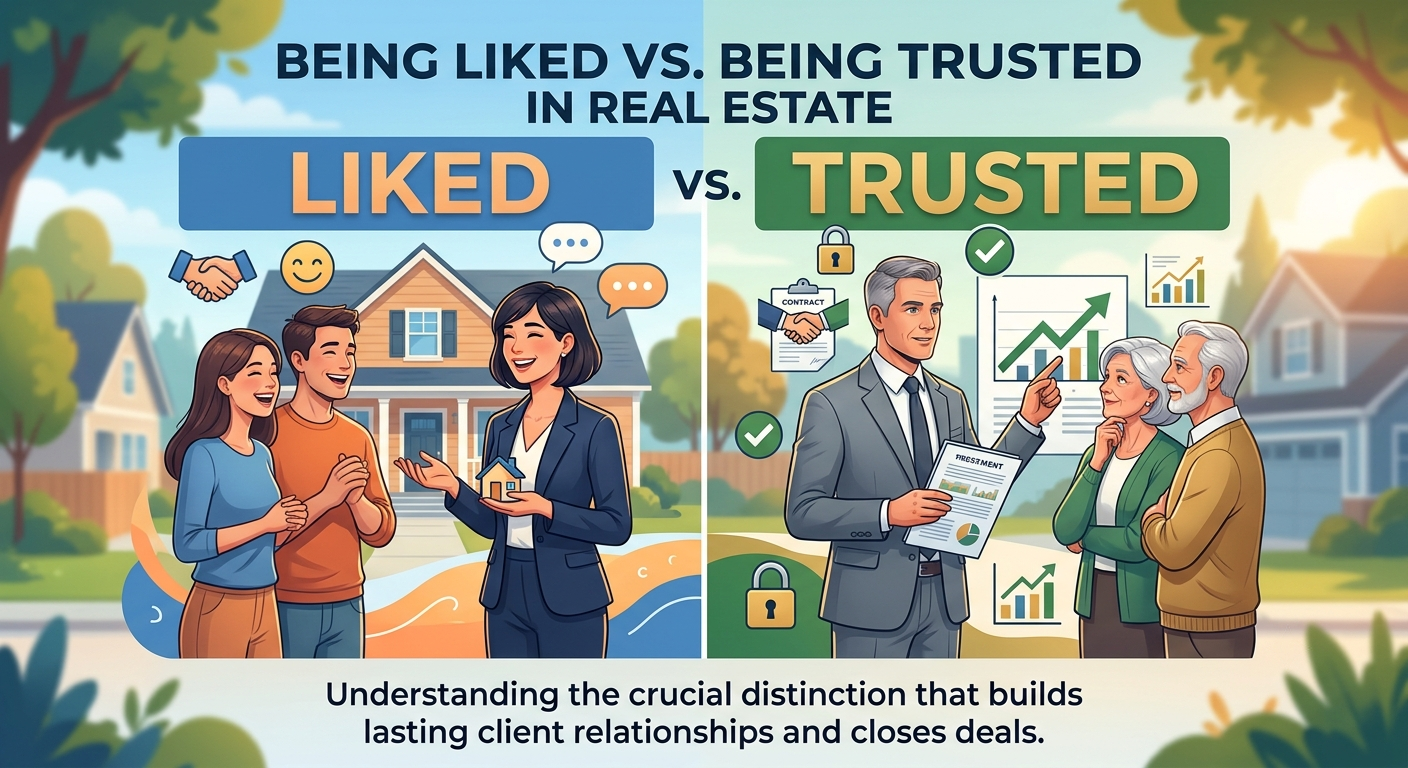
Why This Distinction Gets Overlooked
Many agents naturally assume that being personable, warm, and easy to talk to is the same as being trustworthy. In casual social contexts, that assumption often holds. In high-stakes financial decisions, it doesn't. Clients can genuinely enjoy an agent's company and still hesitate to follow their advice on a six-figure decision if trust hasn't been separately established.
This distinction matters because agents who focus exclusively on rapport, being likable, easy to talk to, fun to work with, sometimes wonder why that warmth doesn't reliably translate into closed deals or referrals. The missing piece is usually trust, which is built differently and requires different behavior than likability alone. Understanding the difference between being liked vs trusted real estate agent qualities is essential for anyone serious about long-term success.
What Likability Actually Provides
Likability lowers the initial barrier to a relationship. A client who finds an agent pleasant is more willing to have a first conversation, more comfortable asking questions, and more likely to enjoy the process of working together. This matters, since real estate transactions are stressful, and a positive interpersonal dynamic makes that stress more manageable.
But likability, on its own, doesn't address the client's underlying concern in a major decision: will this person's advice actually serve my interests? A charming, easy-to-talk-to agent can still fail to earn that confidence if their competence or motives remain in question. The gap between being liked vs trusted real estate agent becomes visible right here — likability opens the door, but it doesn't close the deal.
What Trust Actually Provides
Trust addresses a different question entirely. It's the belief that an agent has the competence to guide the decision correctly and the motive to prioritize the client's interest over their own. Trust is what allows a client to accept a pricing recommendation without extensive independent verification, to move quickly on a strong offer without second-guessing, and to refer the agent to people whose judgment they respect.
Unlike likability, which can form quickly through a single pleasant interaction, trust tends to build cumulatively, through demonstrated reliability, transparency, and follow-through over multiple interactions. When comparing liked vs trusted real estate agent impact on business outcomes, trust is what ultimately drives referrals and repeat business.
Agents Who Are Liked But Not Trusted
It's entirely possible for a client to genuinely enjoy an agent's company while still hesitating to fully trust their judgment. This often shows up as a client who is warm and friendly in conversation but seeks a second opinion before major decisions, delays committing to recommendations, or hedges when asked directly whether they'd refer the agent to someone else.
This pattern is common with agents who are strong communicators and personable but inconsistent in follow-through, or whose advice has occasionally seemed to align a little too closely with their own commission interests. The relationship feels good on the surface, but the deeper confidence required for referrals and repeat business hasn't fully formed. A real estate CRM can help agents track commitments and ensure follow-through doesn't slip, bridging the gap between being liked and being trusted.
Agents Who Are Trusted But Not Initially Liked
The reverse pattern also exists, and it's worth understanding because it illustrates how differently these two qualities function. An agent who is direct, occasionally blunt, or not particularly warm in style can still earn deep trust if their competence and reliability are consistently demonstrated. Clients sometimes describe these agents as "not the most fun to work with, but I trusted every word they said."
Over time, trust of this kind often produces referrals and repeat business at rates comparable to, or even exceeding, agents who are more naturally likable but less consistently reliable. This isn't an argument against warmth. It's evidence that trust, not charm, is the more decisive factor in the liked vs trusted real estate agent equation.
How to Build Both, in the Right Order
The strongest client relationships combine likability and trust, but they tend to develop in a specific order: likability opens the door, and trust is what keeps the client engaged and eventually produces referrals.
Use likability to establish an initial connection. Warmth, attentiveness, and genuine interest in the client's situation make the early relationship comfortable and set a positive tone.
Build trust through demonstrated behavior, not personality. Follow through on every commitment, communicate honestly even when it's uncomfortable, and be transparent about how your recommendations serve the client's interest specifically. Nexxy helps agents stay organized and consistent so no commitment falls through the cracks, turning likability into lasting trust.
Don't let charm substitute for competence. A pleasant interaction that lacks substance eventually surfaces as a gap in trust, particularly under the pressure of a real negotiation or a difficult decision.
Recognize that trust, once built, sustains the relationship even through less pleasant moments. Clients who trust an agent will tolerate a difficult conversation or a piece of bad news far better than clients who like the agent but haven't yet developed deeper trust. Nexxy's real estate operating system keeps every client interaction logged and accessible, so consistency never depends on memory alone.
Frequently Asked Questions
Can an agent be trusted without being particularly likable? Yes. Trust is built primarily through competence, reliability, and transparency, which can be demonstrated even by agents with a more reserved or direct communication style.
Is likability still important if trust is the deciding factor? Yes, likability makes the relationship more pleasant and lowers the initial barrier to engagement, but it isn't sufficient on its own to drive major decisions or referrals.
How can I tell if a client likes me but doesn't fully trust me? Signs include hesitation to act on recommendations without a second opinion, vague responses when asked about referrals, and a friendly but ultimately cautious dynamic throughout the relationship.
Which matters more for generating referrals, being liked or being trusted? Trust tends to be the more decisive factor. Referrals require confidence that the agent will serve the referred person's interests well, which is a trust-based judgment more than a likability-based one.
Conclusion
Likability and trust serve different functions in a client relationship, and conflating them leads agents to over-invest in charm and under-invest in the consistent, reliable behavior that actually earns trust. The strongest client relationships build both, but trust is what ultimately determines whether a good first impression turns into a lasting business relationship.
If you're looking for a better way to build stronger client relationships, stay organized, and communicate consistently, Nexxy was built with professionals like you in mind.