Why One Cadence Doesn't Fit Every Client
A common mistake in real estate follow-up is applying the same contact frequency and content to every relationship, regardless of where that relationship actually stands. A brand-new lead and a client who closed three years ago have almost nothing in common in terms of what they need to hear or how often they need to hear it, yet many agents default to a single generic follow-up habit for everyone in their database.
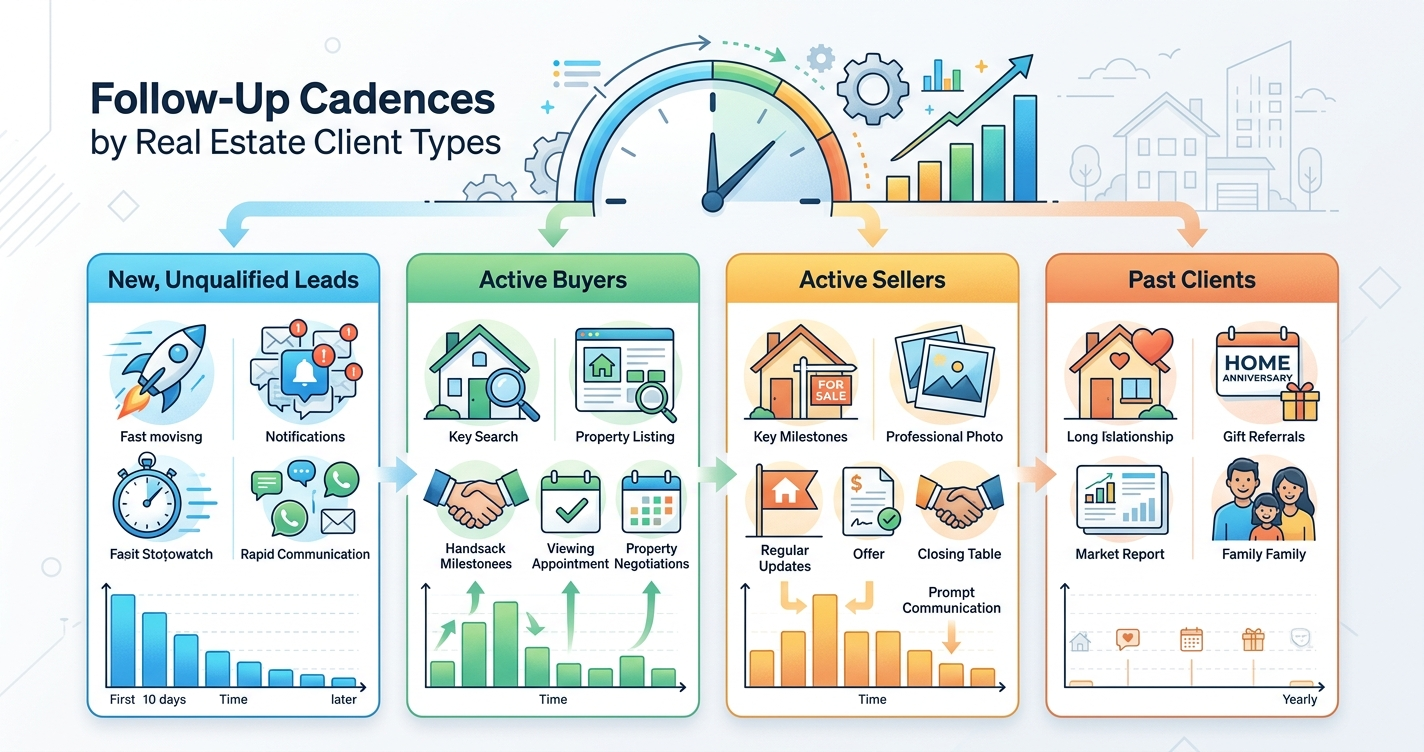
Effective follow-up requires matching cadence to context. New leads need frequent, high-touch contact during a narrow window of peak interest. Active clients need milestone-based updates tied to the transaction itself. Past clients need a much lighter, longer-term rhythm designed to maintain visibility without becoming intrusive. Understanding the right follow-up cadence real estate client types need is essential for maximizing every relationship.
Cadence for New, Unqualified Leads
New leads benefit from a front-loaded, high-frequency approach during their first week to ten days, often structured around a method like 8x8, followed by a gradual reduction in frequency if they haven't converted.
| Timeframe | Cadence |
|---|---|
| First 10 days | Multiple touchpoints across varied channels |
| Weeks 2 to 12 | Weekly to biweekly, value-driven contact |
| 3 months and beyond | Monthly to quarterly, low-pressure nurture |
The goal during this phase is capturing interest while it's highest, then maintaining just enough presence that the lead doesn't forget you exist as more time passes.
Cadence for Active Buyers
Once a lead becomes an actively engaged buyer, the right cadence shifts from a fixed schedule to one tied to real milestones in their search and transaction.
Useful touchpoints include: sharing new listings that match their criteria as they become available, checking in after each showing for feedback, providing updates during offer negotiation, and proactively communicating during inspection, appraisal, and closing preparation. The frequency here is less about a set schedule and more about ensuring the buyer never has to wonder what's happening next or reach out first for an update.
Cadence for Active Sellers
Active sellers benefit from a similarly milestone-driven approach, with a few seller-specific touchpoints layered in.
Useful cadence points include: an initial, detailed listing strategy conversation, regular updates during the listing period even when there's limited new activity to report, prompt communication after every showing or open house, and clear, proactive updates throughout negotiation and closing. Sellers frequently report that anxiety during the listing period is one of the more stressful parts of the process, which makes consistent communication, even brief updates confirming there's nothing new, more valuable than it might initially seem.
Cadence for Past Clients
Past clients require the lightest, most sustainable cadence of the group, since the goal here is long-term relationship maintenance rather than active transaction management.
| Timeframe | Cadence |
|---|---|
| First month post-closing | Personal check-in |
| Months 2 to 12 | Quarterly, value-driven touchpoints |
| Year 2 and beyond | Quarterly to biannual, plus anniversary and milestone contact |
This cadence should rely heavily on genuine value, such as market updates, seasonal tips, and milestone acknowledgments, rather than direct sales messaging, since the relationship at this stage is being maintained for its long-term referral and repeat-business potential.
Building a System That Tracks It All
Managing distinct cadences across a growing client base isn't sustainable through memory alone. A structured system, typically a real estate CRM or relationship management tool, should track which stage each contact is in, when their last touchpoint occurred, and when the next one is due.
Segmenting the database by relationship stage, new lead, active buyer, active seller, or past client, makes it possible to apply the right follow-up cadence real estate client types need consistently, rather than defaulting to a single generic follow-up habit that under-serves some relationships and over-serves others. Nexxy automates this segmentation so every contact automatically moves into the right cadence as their relationship evolves.
Frequently Asked Questions
Should I use the same follow-up frequency for every client? No. New leads, active clients, and past clients each require different cadences based on where they are in the relationship and what kind of contact actually serves them at that stage.
How often should I contact an active buyer or seller? Frequency should be tied to actual milestones in their transaction rather than a fixed schedule, though a general rule of thumb is ensuring they never have to reach out first for an update.
How often should I contact past clients? A quarterly minimum, supplemented by key milestones such as closing anniversaries, tends to maintain visibility without becoming excessive.
What's the best way to manage different cadences across a large database? A real estate CRM or relationship management system that segments contacts by relationship stage and tracks touchpoint timing removes the burden of managing this manually. Nexxy's real estate operating system handles the entire follow-up cadence real estate client types workflow automatically.
Conclusion
Matching follow-up cadence to client type isn't just more efficient, it's more effective. New leads need urgency, active clients need milestone-based reliability, and past clients need patient, long-term presence. Agents who tailor their approach to each stage build stronger relationships across their entire pipeline than those applying a single generic follow-up habit to everyone.
If you're looking for a better way to build stronger client relationships, stay organized, and communicate consistently, Nexxy was built with professionals like you in mind.